
Turkey Residence Permit (Ikamet) Updates: The Ultimate Guide for Expats (2026)
Turkey has long been a top destination for expats, digital nomads, and retirees seeking a high quality of life. However, the landscape for obtaining a Short-Term Residence Permit (Ikamet) has shifted dramatically over the last two years. The days of easily obtaining a permit by simply showing a rental contract are largely over.
If you are planning to move to Turkey or renew your current permit, relying on outdated advice can lead to rejection. Based on the latest regulations enforced by the Presidency of Migration Management (Göç İdaresi), here is everything you need to know to keep your status legal in Turkey.
Table of Contents
The $200,000 Real Estate Rule
For years, buying a property was the “Golden Ticket” to residency. While this route is still open, the financial barrier has increased significantly.
The Old Rule: Previously, properties valued at $75,000 in major cities were sufficient for residency.
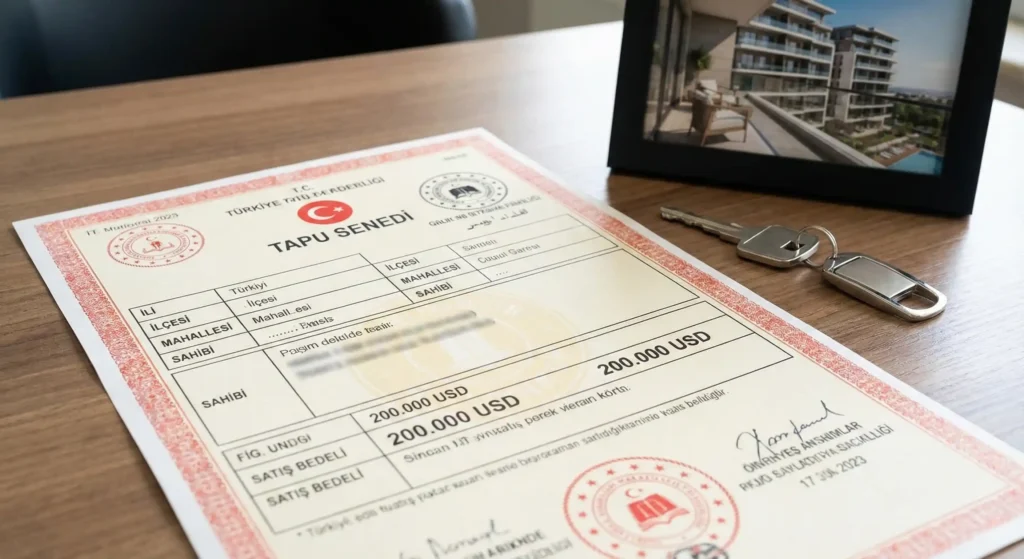
The New Standard: Currently, the minimum acquisition value required to obtain a residence permit is $200,000 USD (market value).
The Critical Detail: This amount must be reflected in both the Title Deed (Tapu) and the official Real Estate Appraisal Report. If you buy a property below this limit, you may own the home, but it will generally not grant you a residence permit.
The "Closed Neighborhoods" List
Before signing a lease or buying a home, checking the location is mandatory. To control population density, the government has suspended new foreign registrations in over 1,169 neighborhoods across Turkey.
Affected Areas: This includes popular districts in Istanbul (such as Fatih, Esenyurt, and parts of Beyoğlu, Şişli), as well as many coastal areas in Antalya and Muğla.
The Risk: Even if you rent a luxury apartment in these zones, your application will be rejected if you are a first-time applicant. Always verify if the neighborhood is “Open” or “Closed” for foreigners at the local population directorate (Nüfus) before committing.
Touristic Permits: The "Silent" Rejection
The “Short-Term Touristic Residence Permit” was once the standard solution for anyone renting an apartment. This is where the biggest changes have occurred.
First-Time Applicants: Approvals for first-time touristic applications based solely on a rental contract have dropped significantly. Immigration officials now often demand a detailed travel itinerary, proof of significant financial resources, and a valid reason for staying beyond the standard 90-day visa.
Renewals: While extending an existing permit is generally easier than getting a new one, it is no longer guaranteed. Extending a permit purely for “tourism” year after year is becoming increasingly difficult without transitioning to a different category (like property ownership or work).
The "120-Day Limit" Myth vs. Reality
There is a lot of confusion regarding how long you can stay outside of Turkey without losing your residency. You might even find conflicting information on some official government websites (such as old pages on the Ministry of Foreign Affairs).
Here is the clarification you need:
The Confusing Info: You may see older clauses stating that “Residence permits will be cancelled if you stay abroad for more than 120 days.”
The Current Law: This specific restriction (Article 33) was abolished in 2016 for Short-Term permits.
The Reality: If you hold a standard Short-Term Residence Permit (Tourist, Property, etc.), there is NO limit on how many days you can spend outside of Turkey. As long as your card is valid, you can travel freely.
The Exception: The restriction on time spent abroad now only applies to holders of the Long-Term (Permanent) Residence Permit, who cannot stay outside Turkey for more than one continuous year (excluding health/education reasons).
The Digital Nomad Visa
Recognizing the difficulties freelancers face with the Touristic Permit, Turkey has introduced a specific Digital Nomad Visa.
Who is it for? Remote workers aged 21-55.
Requirements: You must prove you are employed by a company outside of Turkey, hold a university degree, and have a monthly income of at least $3,000 USD.
Why choose it? It provides a much more secure and legitimate legal status than trying to squeeze into the “Touristic” category.
Mandatory UETS Registration
A vital technical update involves how the government communicates with you. All foreigners applying for residence or renewal must now register for the National Electronic Notification System (UETS).
The immigration office uses this digital platform to send official notifications regarding your status or deportation orders. Failure to provide a UETS address during your appointment can delay your application. You can obtain this via the PTT (Post Office) or the e-Devlet portal.
Final Thoughts
Turkey remains a beautiful and welcoming country, but the era of “no-questions-asked” residency has transitioned into a strictly regulated system. To ensure a smooth process:
Consult a Professional: Rules can vary between different immigration offices (e.g., Istanbul vs. İzmir).
Check Your Zone: Ensure your address is not in a closed neighborhood.
Don’t Panic About Travel: Ignore the old “120-day” rumors; if you have a short-term permit, you are free to travel.








%20Updates:%20The%20Ultimate%20Guide%20for%20Expats%20(2026))